
Why Some Chilli Seeds Take Longer to Germinate
You planted your chilli seeds a week ago.
A few have already popped up, another tray is showing signs of life, but some seeds are doing absolutely nothing.
Should you be worried?
Usually, no.
One of the most common questions we get from chilli growers is: “Why chilli seeds take longer to germinate?”
The simple answer is that not all chilli seeds behave the same way. The variety, temperature, moisture and growing conditions can all influence how quickly a seed wakes up.
Some chilli seeds can germinate surprisingly quickly, while others—especially superhot varieties—may test your patience.
How Long Do Chilli Seeds Take to Germinate?
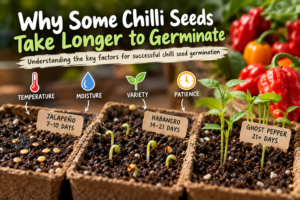
Under good conditions, many chilli seeds will germinate within 7–21 days.
But this is only a guide.
Some varieties can appear earlier, while others may take several weeks. This is particularly common with Capsicum chinense varieties such as Habaneros, Ghost Peppers and many of the superhot chillies.
So, if one variety has germinated and another hasn’t, don’t throw the second tray away just yet!
1. The Chilli Variety Makes a Big Difference
There are several species of cultivated chillies, and their germination behaviour can vary considerably.
Common Capsicum annuum varieties such as Jalapeños and many Cayenne-type chillies will often germinate relatively quickly under suitable conditions.
Capsicum chinense varieties can be slower. This group includes famous hot chillies such as:
- Habanero
- Ghost Pepper (Bhut Jolokia)
- Trinidad Scorpion
- 7 Pot varieties
- Carolina Reaper
These varieties may simply need more time.
When growing several varieties together, don’t expect every seed tray to germinate on the same day.
Different chilli varieties have different personalities—and that’s part of the fun of growing them.
2. Soil Temperature Is Extremely Important
If there is one thing worth paying close attention to during chilli seed germination, it is temperature.
Chillies are warm-climate plants, and their seeds generally respond well to consistently warm growing media.
We generally aim for a soil or growing-medium temperature of around 26–32°C during germination.
If the growing medium is too cool, germination can slow considerably.
This is why chilli seeds sitting on a windowsill may struggle even when the room feels reasonably warm. The air temperature might be comfortable, but the growing medium itself can become much cooler—particularly overnight.
A seedling heat mat can be very useful for maintaining a more consistent temperature.
Warmth matters more than sunlight at this stage
Before germination, your seed doesn’t need strong sunlight to encourage it to emerge.
What it really needs is the right combination of:
warmth + moisture + oxygen + time.
Once the seedling emerges, good light becomes much more important.
3. Too Much Water Can Be as Bad as Too Little
It is tempting to keep watering when nothing seems to be happening.
That can actually make things worse.
The growing medium should be moist, not waterlogged.
A chilli seed needs moisture to begin the germination process, but it also needs oxygen. Constantly saturated growing media can reduce available oxygen and encourage fungal problems or seed rot.
Think of it this way:
Damp is good. Swamp is not.
Check the growing medium before automatically adding more water.
4. Seeds Don’t Follow a Calendar
Two seeds from the same chilli variety can be planted at exactly the same time, in exactly the same growing medium—and still emerge on different days.
That’s nature.
Germination is a biological process rather than a manufacturing process. Each viable seed must absorb enough moisture and reach the right internal conditions before growth begins.
This is why germination is normally discussed as a range of time, rather than an exact number of days.
5. Superhot Chillies Often Require More Patience
If you’re growing superhot chillies for the first time, this is particularly important.
Don’t assume a seed has failed simply because your Jalapeños are already growing while your superhots haven’t appeared.
Many C. chinense varieties can be slower and less predictable during germination.
Keep the conditions stable and give them time.
Constantly digging into the growing medium to see whether the seed is doing anything usually doesn’t help either!
6. Planting Depth Can Affect Germination
Chilli seeds don’t need to be buried deeply.
If planted too deep, the young seedling has to use more stored energy before reaching the surface.
We prefer a light covering of growing medium rather than burying chilli seeds deeply.
Whatever germination method you use, the important thing is to create a warm, moist and reasonably stable environment.
7. Constantly Changing Conditions Can Slow Things Down
One day the tray is inside.
The next day it’s outside.
Then it’s on a sunny windowsill.
Then the nights become cold.
Chilli seeds generally benefit from consistency.
During germination, try to avoid large fluctuations in temperature and moisture. A simple propagation setup with a heat mat can often produce better results than continually moving the seeds around looking for the warmest spot.
Should I Soak Chilli Seeds Before Planting?
You will find plenty of different opinions about soaking chilli seeds.
Some growers soak their seeds before sowing, while others plant them directly into their chosen growing medium.
Both approaches can work.
For most home growers, we believe getting the fundamentals right is more important than experimenting with complicated germination tricks:
Good-quality seeds + correct temperature + controlled moisture + patience.
What Should I Do If My Chilli Seeds Haven’t Germinated After 2 Weeks?
First—don’t panic.
Check the basics:
Temperature: Is the growing medium actually warm enough?
Moisture: Is it consistently moist without being saturated?
Depth: Were the seeds planted too deeply?
Time: Are you growing a naturally slower variety?
If everything looks right, give the seeds more time rather than immediately disturbing them.
This is particularly important with superhot varieties.
Our Simple Chilli Germination Method
At The Hippy Seed Company, we’ve been working with chillies for many years and grow hundreds of different chilli varieties on our Sydney farm.
For home growers, we like to keep germination straightforward.
Use a quality seed-raising medium or Jiffy pellet, maintain a warm growing-medium temperature of approximately 26–32°C, keep it consistently moist rather than wet, and be patient.
Once seedlings emerge, introduce them to good light and continue monitoring moisture carefully.
The biggest mistake is often not doing too little.
It’s doing too much because the seed hasn’t germinated quickly enough.
Why Growing Chillies From Seed Is Worth the Wait
Growing chillies from seed gives you access to an incredible range of colours, shapes, flavours and heat levels that you simply won’t find as established plants at the average garden centre.
From sweet and mild chillies through to unusual ornamental varieties and some of the world’s hottest peppers, every variety starts with that tiny seed.
And there’s something particularly satisfying about seeing the first little green shoot appear after waiting patiently for it.
Sometimes the slowest seed in the tray becomes your favourite plant of the season.
Frequently Asked Questions
How long should I wait for chilli seeds to germinate?
Many chilli seeds germinate within 7–21 days under suitable conditions, but some varieties can take longer. Don’t discard slower varieties too early, particularly superhot chillies.
What is the best temperature for germinating chilli seeds?
We generally recommend keeping the growing medium around 26–32°C. Consistency is important, which is why a heat mat can be helpful.
Why did only some of my chilli seeds germinate?
Seeds don’t necessarily germinate simultaneously. Variety, temperature, moisture and natural differences between individual seeds can all influence germination time.
Do superhot chilli seeds take longer to germinate?
They can. Many superhot varieties belong to Capsicum chinense, which can take longer to germinate than many common C. annuum varieties.
Do chilli seeds need sunlight to germinate?
Strong sunlight isn’t the main requirement before germination. Warmth and moisture are more important at this stage. Once the seedlings emerge, however, they need adequate light for healthy growth.
Should I give up if nothing has happened after 14 days?
Not necessarily. Check your temperature and moisture first and give slower varieties additional time. Two weeks without a seedling does not automatically mean the seed has failed.
Ready to Grow Something Different?
At The Hippy Seed Company, chilli growing is more than simply chasing heat.
We grow 600+ chilli varieties on our Sydney farm, from mild and unusual chillies to rare varieties and extreme superhots.
Whether you’re growing your first Jalapeño or looking for something you’ve never seen before, start with good-quality seeds, create the right conditions—and give nature the time it needs.